













The Aesthetic Medicine Website That Wins Trust
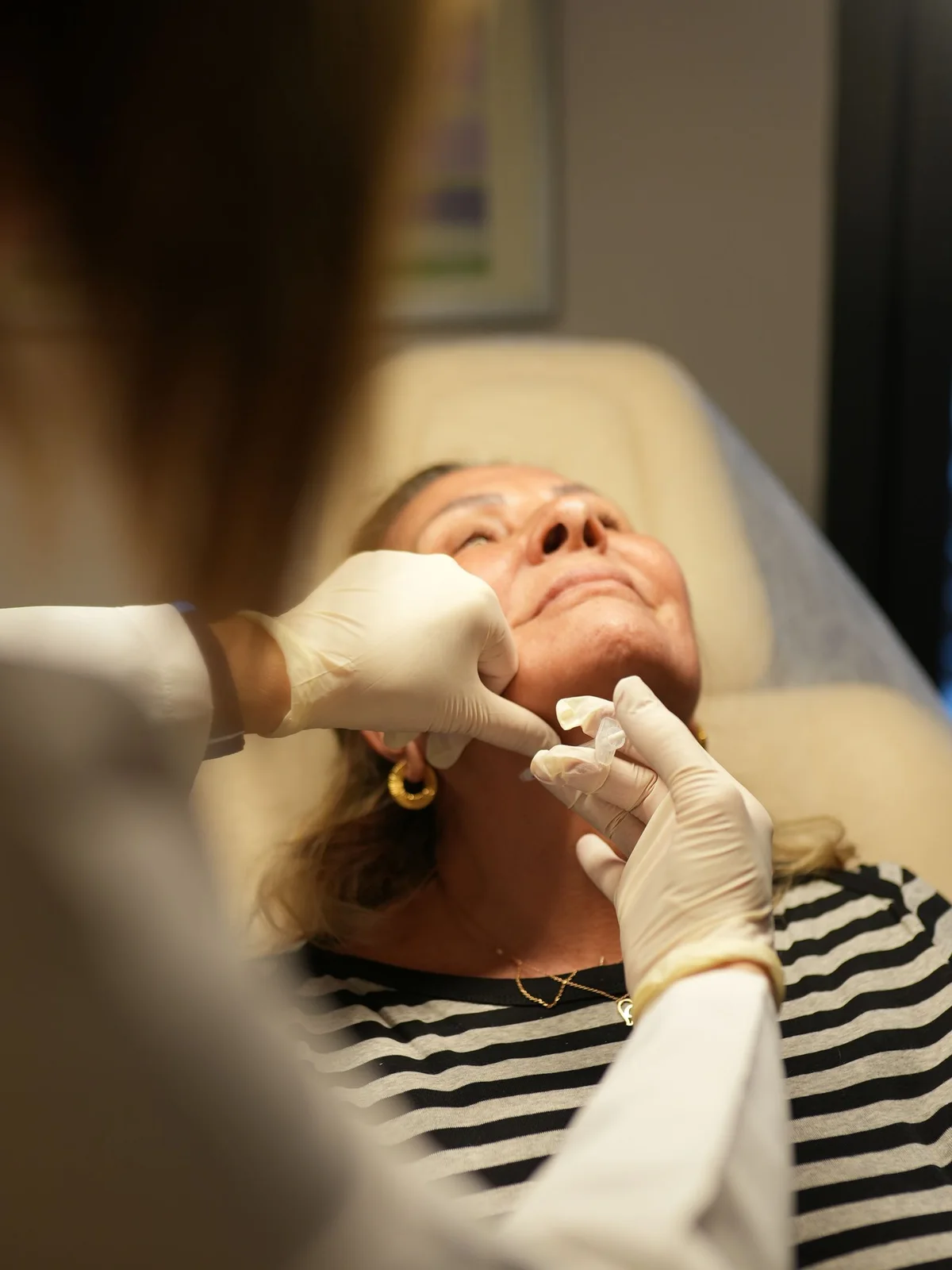
Picture the most common way a new patient finds you. A woman in her forties looks in the mirror one evening, notices the first lines around her eyes, and thinks about it for weeks before doing anything. Then one night she reaches for her phone and types “aesthetic medicine Lugano” or “lip filler near me.” Up comes a map with a few names, a row of social profiles, and - if you are lucky - a couple of genuine medical practices. Before booking anything, that person wants to quietly answer two questions she will never say out loud: will it look natural, and is the person putting their hands on my face really a doctor? The practice with an aesthetic medicine website that answers both calmly and with taste earns the consultation. The one with an Instagram profile and nothing else loses it to someone who, on top of showing, also knows how to reassure.
An aesthetic medicine website is not a glossy brochure that has sat untouched since 2019, and not a rented profile on a platform that decides who sees you. It is a proper medical practice of your own, online: somewhere a cautious patient can work out who you are, what you do and why it is safe, where someone who has been mulling it for months can finally book a consultation at eleven at night, and where the word “doctor” - the thin line that separates you from a beauty salon - stays at the centre of everything. This guide is about what that site actually needs to do, what turns anxious curiosity into a booked consultation, and why - across Switzerland and Italy - the practices that fill their diary are the ones that treat the site as a clinical tool rather than an advertising poster.
The two fears behind every enquiry
Here is what most aesthetic medicine sites get wrong. They lead with a flawless-skinned model and a list of trendy treatments, as if the patient’s first thought is which procedure to choose. It is not. The first thought, sitting unspoken behind almost every enquiry, is made of two fears working together.
The first is the fear of an unnatural result. Nobody looking for filler or a little botulinum toxin wants to walk out of your clinic with a puffy, frozen face, recognisable at a distance as “done.” The “less is more” culture is now widespread, and the most informed patients - precisely the ones worth having - fear the doctor who overdoes it more than anything else. The second is the fear about safety: is the person injecting this substance actually a doctor, do they know how to handle a complication, will they use a traceable, compliant product? In aesthetic medicine these two fears count for more than price, more than location, more than the list of machines. A site that meets them honestly converts. A site that ignores them, however elegant, leaves the consultations to others.
This changes what your homepage should do in its first few seconds. Not a promise of eternal youth, but a medical, understated, discreet tone. The doctor’s face, not just a model. Calm, responsible language - “we assess together what you actually need,” “our aim is a natural result, not a transformed face” - says more than ten treatments listed. The beauty of the results matters, and we will get to it, but it lands far better once the patient already feels in safe hands. Safety first, desire second. Most practices have that order reversed.
The thin line between medical practice and beauty salon
There is one word that decides your entire positioning, and that word is “doctor.” In the mind of a searcher, the boundaries between a beauty salon offering aesthetic treatments and a medical aesthetics practice run by a physician are blurred, and sometimes deliberately confused by people who do not have the qualifications to stand on your side of the line. Your site has one job before it sells anything: to make clear which side you are on.
This is not professional vanity, it is the substance of trust. A patient who chooses a doctor for filler is choosing someone who knows facial anatomy, who knows what to do if an injection goes wrong, who is on a professional register and answerable to a medical body. These are serious things, and careful patients look for them. When your site puts the physician’s figure, training, registrations, safety protocols and complication management up front, you are not boasting - you are answering exactly the second silent fear, the one about safety. And you are doing it in a way a beauty salon simply cannot replicate.
There is also a practical and delicate matter: tone. An aesthetic medicine site written like a wellness-spa advert - breathless enthusiasm, promises of results, bait pricing and countdown timers - reads wrong to the right patient and, in many jurisdictions, brushes up against the ethical limits on medical advertising. The rules on what a doctor may promise and show differ between Switzerland and Italy, and should always be checked with your professional association. But the direction is clear: restraint, honesty, no promise of results. A medical tone is not less persuasive than an advertising one - for someone seeking a serious professional, it is far more.
Why Instagram alone is not enough
Plenty of aesthetic doctors tell us the same thing: “I have thousands of followers, people message me in DMs, isn’t that enough?” Fair question, and the answer is no, for reasons that have nothing to do with effort and everything to do with what social can and cannot do.
Instagram is excellent at the top of the funnel, and it has every right to sit at the centre of your presence. A natural result photographed well, a glimpse of a modern, clean practice, a short video where you calmly explain a treatment - all of it builds desire and gets you known. What a feed cannot do is hold still and answer the hard questions. Your best post has floated out of sight by the weekend, you are at the mercy of whatever the algorithm feels like showing, and a viral Reel has never once reassured a cautious patient about your credentials on its own. A DM is a chaotic, untraceable channel where sensitive information gets lost and nobody really books with a name and a date. Treat social as the shop window that intrigues, not the consulting room where the decision is made.
Then there is the matter of trust, which weighs particularly heavily in aesthetic medicine. A follower has seen your results; they do not yet know whether they can trust you with their own face. The distance between those two things is closed by calm reading - who the doctor is, how they work, what happens at the first visit, what they do if something goes wrong, what patients who have already been through it say. None of that fits into a carousel. Social’s job is to walk an interested stranger somewhere they can move from desire to trust - and that somewhere is a site whose keys you actually hold.
Out of your whole online presence, one thing answers to you and no one else: your own site. The wording a cautious patient meets, the face at the top, the speed it loads at, the exact moment the consultation button appears - all of that is yours to set, and none of it is borrowed. It keeps working when the practice is dark: at eleven at night, while someone turns a decision over in their mind for the umpteenth time, the site is awake and ready to receive them. And best of all, nothing it earns is taxed on the way to you - the consultation, the enquiry, the question about a treatment all land directly in your hands, with no commission skimmed and no algorithm deciding whether your patients ever find you.
What belongs on an aesthetic medicine website
An aesthetic medicine site lives or dies on two things: how quickly a patient comes to trust you, and how easily they can book a consultation. Everything else supports those. Here is what earns its place, roughly in the order a visitor meets it.
Consultation booking, not a generic form
This is the feature that moves the needle most, and the one many sites either lack or bury. But here is an important difference from a salon: in aesthetic medicine the front door is not the treatment, it is the consultation. A serious patient does not want to book “a filler” sight unseen - they want to book a visit where the doctor assesses, listens and advises. Your site must make that first step obvious and simple: choose an assessment consultation, see genuine availability, confirm in under a minute, with a confirmation and reminder to follow. Framing the front door as a consultation rather than a purchase is itself a signal of medical seriousness that the right patient picks up immediately.
Treatment pages that explain, not just list
A bare list - “botox, filler, laser, peels, biostimulation” - tells a patient nothing they did not already know, and answers none of their fears. The treatments that bring real revenue, and real hesitation, deserve a proper page each. For each one: what it does and does not do, what to expect during and afterwards, how long the effect lasts, the risks and contraindications stated honestly, how you manage safety. This honesty does not scare the right patient - it wins them, because it is exactly what separates a doctor from someone selling a service. And these same pages do double duty: they are what search engines use to put you in front of someone typing “lip filler” or “laser for facial pigmentation” rather than just “aesthetic medicine.” Write them for the cautious person first; the ranking benefit follows.
If your patients are at all international - and in Ticino and many border areas they often are - multilingual treatment pages stop being a nicety. Someone deciding to trust you with their own face wants to read the details in their own language before they book.
Before-and-after, with taste, consent and context
In aesthetic medicine, visual proof is powerful in a way it is in few other fields: nothing convinces like seeing a real, natural result. But it is also the most delicate ground on the site, and it needs specific care.
Before-and-after only works if it respects three conditions. Written patient consent, always and without exception. Honest medical context beside each case - what the patient came in with, what was done, with what aim - so a photo becomes a small clinical story rather than an advert. And taste: natural, believable results, not extreme transformations that frighten the very people who fear excess. The rules on what a doctor may show differ between Switzerland and Italy and should be checked with your professional association, but the principle is everywhere the same - no promise of results, no advertising tone. Done well, before/after is the strongest proof you have. Done badly, it drives away exactly the careful patients you want to attract. The site should be built so that showing it the right way is easy and natural.
The doctor, the credentials, the safety
Here you answer the second silent fear in full, and here you genuinely set yourself apart from a beauty salon. A few things tip the trust decision, and they are mostly matters of competence and transparency:
- A real doctor page, with a face, a name, training and a human tone. The patient is trusting their face to a specific person; show them who it is, where they trained, how many years they have practised, what they specialise in.
- Genuine registrations and qualifications, stated plainly. The professional register, the relevant scientific societies, advanced courses - facts, not adjectives.
- The safety protocols, explained without jargon. Traceable, compliant products, complication management, a sterile environment, a medical assessment before every treatment. These are the words a cautious patient is looking for without knowing they are looking for them.
- Honest reviews, ideally pulled through from where patients already leave them. “Natural and discreet, I felt listened to” from a real person is worth more than ten adjectives written by you.
A note on discretion and privacy, because it matters specifically in this field: many patients experience aesthetic medicine as something private, not to be shared. A site that understands this - that communicates confidentiality, that does not ask for more than necessary in its forms, that handles the enquiry with tact - reassures a slice of patients who would otherwise never book.
If you would rather see all of this assembled into one working practice site than read about it in a list, we built a complete demonstration you can click through: see the live demo. It is a fictional practice, but every flow - consultation, treatment pages, consented before/after, doctor credentials - is real and working.
Making the aesthetic medicine website convert
Having the right pages is necessary. It is not enough. The gap between a site that looks nice and a site that fills the diary comes down to a handful of unglamorous details.
Speed and mobile come before everything. The person reaching for their phone in the evening, after weeks of thinking about it, is not in a patient frame of mind, and they are almost never at a desk. If your homepage makes them wait while a bloated theme drags itself onto a phone screen, you have lost them somewhere around the second or third second, long before the doctor’s reassuring face has rendered. Quick to load and effortless on a small screen is not a refinement you add later; it is the thing that decides whether the consultation happens at all.
Make the consultation the obvious next step, everywhere. A persistent “Book a consultation” button that follows the visitor down the page, repeated near the bottom of every treatment description, with the phone number one tap away for those who prefer it. Not five competing calls to action - one clear one, available the moment the patient is ready. Decision fatigue loses bookings; a single obvious step wins them.
Reassurance sits next to the action. A line like “the first visit is an assessment: we talk, we listen, no treatment unless you’re ready” placed right beside the booking button measurably lifts how many cautious people actually click it. A calm photo of the doctor near the form, a review about how natural the result was, a plain note on how you manage safety - these are what give an unsure visitor permission to commit.
Response speed closes the case. The site can hand you the enquiry the instant it is made; what happens next is on you. A patient who hears back within a few hours, warmly and discreetly, feels looked after before they have even sat in the chair. Leave the same message for days and you are often replying to someone who has since booked elsewhere. Wire every form so it lands in front of a real person immediately, and run that inbox with the same care you would give a delicate phone call.
Reduce the friction, and respect privacy. Every extra field on a booking is a small reason to abandon it, and in aesthetic medicine the patient is already cautious. Ask for the bare minimum to set the consultation - name, contact, the treatment they are interested in - and gather the rest in the clinic, in person. A restrained, discreet form always out-converts a long questionnaire that, in such a private field, only creates unease.
Local SEO: getting found in Lugano and Ticino
Sooner or later the question becomes “how do people find the site?” In aesthetic medicine the answer almost always starts with local search, and this is where a well-built site makes an enormous difference.
The patient does not search “aesthetic medicine” in the abstract - they search “aesthetic medicine Lugano,” “filler Ticino,” “aesthetic doctor near me.” Local search rewards a fast, well-structured, multilingual site with clean treatment pages that answer real questions, a complete and well-kept Google Business Profile, and genuine reviews. It is slow to build - a new site does not rank overnight - but it is the best value in marketing, because once it works it keeps working, patients arrive already informed and more trusting, and you pay nothing per lead. A practice with a year of solid local presence has built a quiet asset that brings consultations on its own.
There is room for paid advertising too, but with discipline. The rules on medical advertising differ and must be respected; the tone has to stay medical even in an ad. A well-targeted campaign on a specific treatment, pointed at a strong page and a clean booking, can work - but the patient stops the instant you stop paying, whereas local organic, once built, keeps working. The sane order is clear: build the site properly first, because every click lands on it, then support it with focused campaigns if you wish, while your organic presence builds underneath. Paid buys you a patient today. Organic and local reputation buy you patients every tomorrow.
Ready-made or built from scratch?
So the site matters - the last real decision is how to get one. For most practices, the traditional bespoke route is the wrong default, and here is the honest reasoning.
A custom build is a months-long project with a five-figure invoice, in which you pay someone to reinvent consultation booking, treatment pages, a consented before/after gallery and contact forms that have been built hundreds of times already. You carry the project risk, the launch date drifts, and the clever parts - the consultation booking, the multilingual treatment pages, the elegant handling of before/after - are exactly the bits that get cut when the budget runs short. At the end you own a codebase you must now maintain, update and keep secure indefinitely. There are practices for which a full bespoke build is right - large clinics with genuinely unusual systems to connect. Most are not that.
There is a second way, and for most practices it is the better one: start from an aesthetic medicine site that already exists. Ours has been built once, then sharpened over and over against how real practices actually use it - so the hard questions about what works are already settled before your name goes on it, and the wait is measured in days rather than seasons. The commercials are deliberately simple: a sensible one-time setup, then a flat monthly fee that rolls hosting, maintenance, security and the small ongoing tweaks into one figure - and not a cent of commission on the consultations it brings. It stays fully yours to shape: your brand, your colours, your doctor, your treatments, with bespoke additions later if you grow into them. Starting from something proven does not box you in; it just means the practice is taking consultations while a bespoke project would still be in wireframes.
That is precisely the model behind our ready-made aesthetic medicine website - one of a whole line of ready-made websites built for specific industries. You get the practice site a custom build would have delivered, without the months and the five-figure risk, and you can be taking consultations next week instead of next quarter.
Where to start
If you take one thing from all of this, hold two together: answer the two fears, and never let anyone forget you are a doctor. Lead with safety and naturalness, so the cautious newcomer feels calm enough to book a consultation, then keep the physician’s figure, the credentials and the clinical responsibility at the centre of every page, so the line that separates you from a beauty salon stays sharp. A restrained, elegant site that a careful person trusts on sight; honest treatment pages that explain rather than promise; a discreet reply that goes out within hours, every time. Put those together and the diary quietly fills with the right consultations while you get on with the medicine.
None of this is the obstacle it once was. There was a time when simply having a working practice site was a project in itself; that time has passed. The site exists, it does its job with the medical tone your field demands, and it can be carrying your name and confirming your consultations inside a week.
Frequently asked questions
- How much does an aesthetic medicine website cost?
- A custom build easily runs into five figures and takes months before it earns anything. A ready-made, productised site like ours is a one-time setup plus a low all-inclusive monthly fee that covers hosting, maintenance, security and small changes - the current figure is on the solution page. There is never a commission on the consultations the site books for you.
- I have a large Instagram following. Do I still need a website?
- Instagram is strong at the top of the funnel: it builds desire and shows your results. What it cannot do is reassure a cautious patient about your medical credentials, calmly explain a filler treatment, show the consultation, or get found when someone searches 'aesthetic medicine' in your area. The site is where a curious follower becomes a booked consultation, with a name and a date. The two tools do different jobs.
- How do I stand apart from a beauty salon in the eyes of a searcher?
- By putting the word 'doctor' at the centre, not in the margins. The physician's face, professional registration, training, safety protocols, complication management: these are the things that tell a patient they are entering a medical practice, not a salon. A site built around safety and clinical competence positions you exactly where you want to be - beside doctors, not beside beauticians.
- How long before it is online?
- A ready-made aesthetic medicine site goes live in a few working days. We set up your brand, colours, doctor and treatments, connect your consultation booking, and it is live. A bespoke project is usually a two to four month commitment, and the extras that matter - consultation booking, multilingual treatment pages, a consented before/after gallery - are exactly what slips when the budget runs short.
- Is before/after allowed, and how should it be shown?
- The rules differ between Switzerland and Italy and should always be checked with your professional association, but the principle is clear everywhere: written patient consent, no promise of results, honest medical context. Done well, before/after is the strongest proof you have. Done badly - no consent, no context, an advertising tone - it is an ethical risk and drives serious patients away. The site should be built so it is easy to show it the right way.