










The Bicycle Shop and Workshop Website That Sells
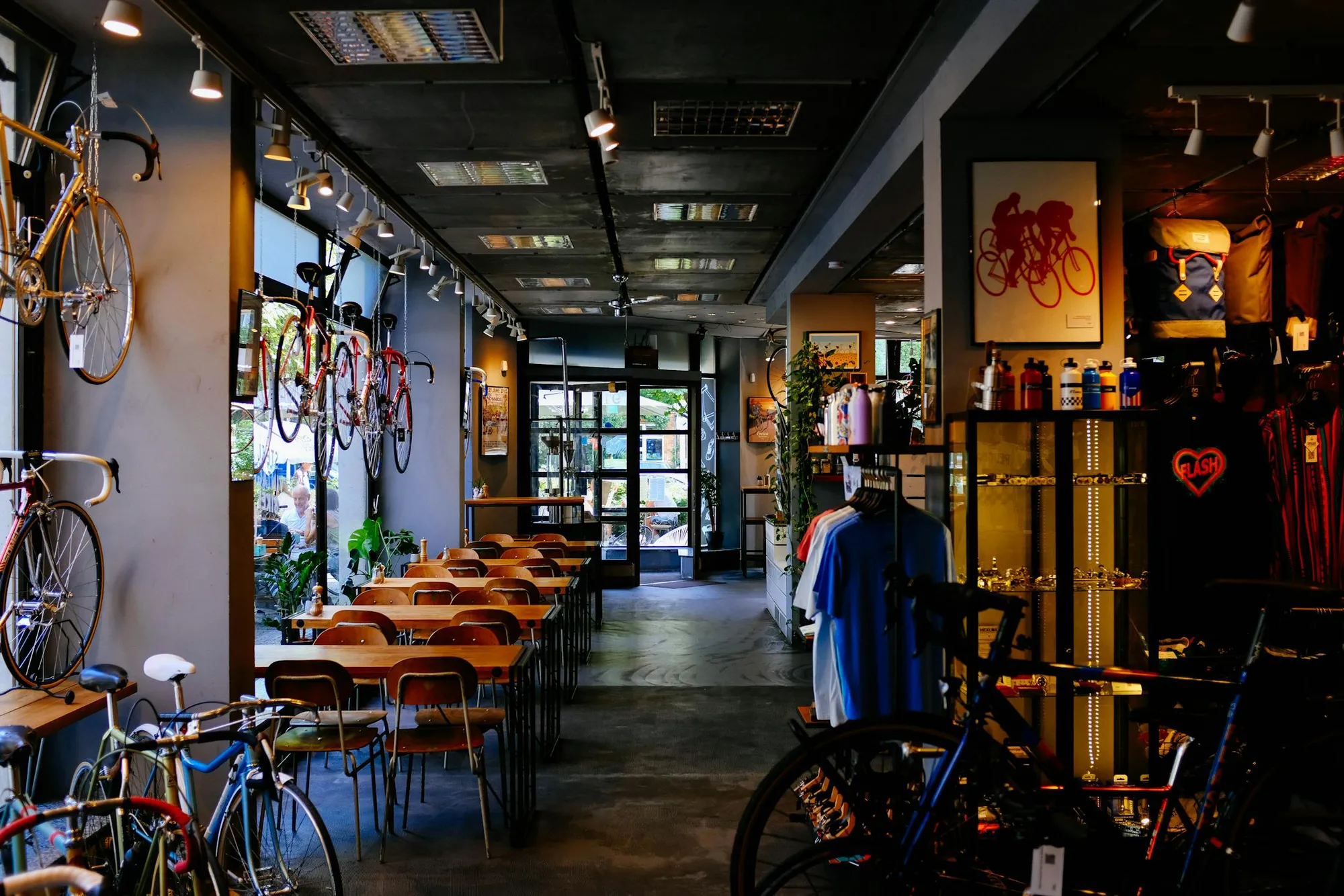
Count the empty slots on your workshop bench on a Tuesday in April. Each one is a service that should have been booked and was not - a rider who meant to call about a creaking bottom bracket, got busy, and let it ride until summer. None of them chose a competitor. They just hit a small wall of friction and gave up, and the labour hour that pays your rent quietly evaporated. Do that maths across a season and the bench that sat idle is a serious sum of money that never reached your till. A proper bicycle shop and workshop website is what closes that leak - it takes the booking in the second the thought arrives, before life gets in the way.
The same slow bleed runs through the showroom. The rider who admired a four-thousand-franc e-bike for ten minutes and left “to think about it” needed one easy way to keep the conversation going - and a phone number on a brand’s page and a quiet Instagram do not give them one. Not a one-page brochure that has not changed since you took over the shop, and not a marketplace that owns the customer, but a real site of your own: where someone browses your stock, books a repair, sees roughly what it will cost, and asks about the bike they have been circling for a month. This guide is about what that site has to do, and why - across Switzerland and Italy - the shops keeping their workshop full and their e-bikes moving stopped treating their website as a formality.
The real job of a bicycle shop and workshop website
Most shop owners think the website is there to show bikes. Fair instinct, wrong target. The bikes are the easy part - the brands photograph them better than you ever will, and a rider hunting a specific model already knows where to look. What your site is really doing is two quieter jobs that nothing else in your marketing does, and both pay better than a hero shot of a new gravel bike.
The first job is capturing the workshop. A bike shop without a busy workshop is a low-margin box-shifter competing with online retailers on price, which is a fight you do not win. The workshop is where the real money lives: services, repairs, wheel builds, the spring tune-up everyone needs in the same fortnight. That work is recurring, it is high-margin, and an enormous slice of it never reaches you - not because the rider chose someone else, but because they meant to call, got busy, and the squeak sorted itself out by summer. A website that takes the booking in the moment they think of it is the difference.
The second job is the e-bike. An e-bike is a 3,000 to 6,000-franc decision, and nobody makes it from a phone on a Tuesday night. They research for weeks, compare motors and ranges, read about your shop, come in for a test ride, think some more, and eventually buy. Your site has to support that slow, considered journey - inform it, build the trust, and make it effortless to take the one step that matters: walking into your shop, or asking you a real question. Get that wrong and the rider does all their research on your site and buys from a chain that simply made the enquiry easier.
Hold both jobs in your head and the whole site arranges itself around them.
Why a dealer locator and an Instagram are not enough
Plenty of owners tell us a version of the same thing: “I’m on the brand’s dealer finder, I’ve got a Google profile, I post on Instagram - isn’t that the bases covered?” It is a reasonable list, and it still falls short. The problem is not how hard you are working those channels; it is that you do not own a single one of them.
The brand dealer locators - Bosch’s, Trek’s, Specialized’s, Cube’s, whoever you carry - do exactly one thing well: they tell a rider already loyal to that brand that you exist nearby. Be on them. But understand what they are not. They will not let someone book a Saturday service, they will not answer “do you have it in a 56,” and the person who clicks through is the brand’s customer, sent to you on the brand’s terms. You are a pin on someone else’s map.
The marketplaces are the same trade in a louder package. Selling parts or bikes through a big online marketplace can move stock, but you are renting the customer by the transaction, competing on price with every other seller on the same screen, and handing over a cut of a margin that was already thin. Useful for shifting last season’s stock. A terrible foundation for a business.
Social media is the half that gets oversold. Instagram is a genuinely good shop window - a finished custom build, a clean workshop, a “just in” reel of the new e-cargo bike. But it is rented land. The algorithm decides who sees you, a post is gone down the feed by tomorrow, and nobody schedules a brake bleed or commits to a four-grand e-bike because a Reel did well. Social is the top of the funnel. It points people somewhere. That somewhere should be a site you own.
The one item on that list that answers to you is your own website. Its words, its loading speed, the brands and local searches it goes after, what happens the moment a rider decides to book or ask - all of it is yours to set. So when a commuter at ten on a Sunday night finally accepts the gears have to be sorted before Monday, the site is awake and the booking drops into your diary while your hands are still in a wheel build. Nothing skims a cut, no middleman sits in the middle, no algorithm gets a vote on whether you are seen - and the customer, their bike and every service you have ever done on it stay on your books, not someone else’s.
What belongs on a bicycle shop and workshop website
A bike shop site earns its keep on two flows above all: getting a repair booked and getting an e-bike enquiry started. Everything else exists to feed those two. Here is what deserves a place, roughly in the order a rider runs into it.
A bike catalogue with filters that actually filter
Riders arrive with a shape in mind: an e-bike under five grand, a 56cm road frame, a kid’s 24-inch, a gravel bike they can also commute on. The catalogue has to let them narrow to that in seconds - filter by type (road, gravel, mountain, city, e-bike, kids), by frame size, by e-bike versus acoustic, by price band - with results that update instantly. No full-page reloads, no dropdown that forgets what you picked. You are not trying to out-stock an online giant here; you are helping a local rider see, fast, that you have something worth coming in for. A clean filtered catalogue does that. A flat PDF of “our range” does not.
Honest stock, and the brands named loudly
Bike buyers shop by brand more than almost any other trade. Someone wants a Trek, a Cube, a Santa Cruz, a Bosch-powered anything - and they search for it by name. So name your brands, everywhere it is honest to: on the catalogue, on the homepage, on a dedicated “brands we carry” section. It is good for the rider and quietly excellent for search, because “Specialized dealer” and your town is exactly the kind of thing people type. Keep stock realistic, too - nothing burns goodwill like a rider driving over for a bike that sold three weeks ago.
The repair booking - the page that pays the rent
Here is the heart of the whole site, and the part most bike shop sites either bury or skip. The workshop is your steadiest, highest-margin revenue, and it is mostly lost to friction. A rider should be able to book a service the moment they think of it: pick what is wrong or what they want done - basic service, full service, brake bleed, gear adjustment, puncture, wheel true, e-bike diagnostic - choose a slot from your real availability, leave their details and bike, and be done in under a minute. That request hits your diary and your inbox immediately. No phone tag, no “we’re a bit slammed, call back Tuesday.” We have watched shops add a proper online booking and fill spring slots they did not even know they were losing.
An instant service estimate
Pair the booking with a rough price up front and you remove the single biggest reason people hesitate: not knowing what it will cost. A simple instant estimate - pick the service, see a from-price or a sensible range before you commit - does more for conversion than any reassuring paragraph. “Full service from 120, brake bleed from 45, e-bike diagnostic from 60.” Riders who can see the number book. Riders left guessing close the tab and tell themselves they will call later, which mostly means never. It also pre-qualifies the work, so you are not quoting the same five jobs over the phone all day.
E-bike pages that do the slow-sell work
The e-bike is your high-ticket line, and it needs more room than a catalogue tile. Give e-bikes real pages: motor and battery, range in plain terms a commuter understands, what it is genuinely good for, sizing help, the test-ride invitation front and centre. This is where a rider talks themselves into a four-figure purchase over a fortnight, so the page has to inform and reassure, then make the next step tiny - ask a question, or book a test ride. Treat e-bikes like an afterthought in the grid and you will keep doing free research for the chains.
The bike enquiry, one tap from every bike
Where the repair booking captures the workshop, the bike enquiry captures the big sale. Every bike, and especially every e-bike, needs a “ask about this bike” or “book a test ride” action right next to it. A rider who is curious about a specific model should be able to ask - is it in my size, can I try it Saturday, what’s the trade-in worth - without hunting for a contact page. Each enquiry lands straight in your inbox. This is the most valuable lead a bike shop gets, because it is a person with four grand and a clear intent, and it deserves to be one tap away, not buried.
Proof you are the shop to trust
Around the essentials, a few things tip the decision: a real workshop and team page with faces and a named mechanic, your certifications (Bosch eBike service, brand-specific training), honest reviews, and specifics over slogans. “30 years fixing bikes in the area” and “factory-trained on Bosch and Shimano systems” mean something. “Passionate about cycling” means nothing - everyone says it. A photo of the actual workshop, tidy and real, does more than any stock image of a sunny trail. It is worth a line, too, on the things riders quietly worry about: do you service bikes you did not sell, do you handle older e-bike systems, how long is the turnaround in peak season. Answering those before they are asked is its own kind of proof - it signals you have seen the question a hundred times.
If you would rather see all of this assembled into one working shop than described in a list, we built a full demonstration you can click through: explore the live demo. It is a fictional shop, but the catalogue, the filters, the repair booking, the instant estimate and the bike enquiry are all real and working.
Turning visitors into customers
The right pages are necessary. They are not enough. The gap between a tidy site and a site that fills the workshop and moves e-bikes comes down to a handful of plain details.
Speed and mobile, before anything. Almost all of this traffic is on a phone - a rider on the trailhead with a broken spoke, a commuter on the train deciding to finally book the service. A site that takes four seconds to load has already lost a slice of them. Fast loading and a genuinely good phone experience are not nice-to-haves; they are the price of entry, and a heavy, plugin-stuffed site quietly costs you bookings every week.
Name the highest-value action, then make it loud. For a bike shop there are two, and they are not equal. The repair booking is your volume and your margin - it should be reachable from everywhere, the single most obvious thing to do on the site. The bike enquiry is your high-ticket - rarer, but each one is worth a hundred services. If you make one thing impossible to miss, make it the booking; if you make a second thing easy, make it the enquiry. Bury either and you have built a brochure. A useful test: open your own site on a phone and try to book a service in under a minute. If you cannot find the button, neither can the rider, and they will not look for long.
Show the price, kill the hesitation. The instant estimate is not a gimmick, it is conversion. People book what they can price and abandon what they cannot. The same logic runs through the whole site: fewer fields on the booking form, plainer language, a slot picker instead of “we’ll call you back.” Every bit of friction you remove is a service that lands instead of evaporating.
Answer speed wins the e-bike. This is not strictly a website job, but the site sets it up. A bike enquiry that reaches you instantly and gets a real reply within the hour converts far better than one you get to tomorrow - because that rider is also enquiring at the shop down the road. Build the site so enquiries hit your inbox the second they are sent, and treat that inbox like the four-thousand-franc lead source it is.
Trust signals next to the button. A review, a Bosch service badge, a real phone number, your mechanic’s face - placed right beside the booking or enquiry form, not hidden on an “about” page - measurably lifts how many people actually submit. People hand over their details when it feels like dealing with a person, not a form.
None of this is clever. It is just rarely done well in this trade, which is exactly why doing it well puts you ahead.
Organic versus paid: where the budget goes
Sooner or later the question is “how do riders find the site?” Two answers, two completely different clocks, and a sensible shop uses both - in the right order and the right proportion.
Organic traffic is what you earn from search and word of mouth: people typing “bike repair” and a place name, “e-bike service” and a town, or a brand and “dealer near me.” It builds slowly - a new site does not rank in a week, and the local signals and content that lift you take months to compound. But it is the best money in marketing, because once it works it keeps working with nothing on the meter, and a bike shop’s searches are gloriously local and high-intent. This is where a fast, properly structured site with your brands named and a real local presence earns out. It is the foundation the rest sits on.
Paid traffic is the mirror image: instant, and rented. Google Ads can put you at the top of “bike service” plus your area this afternoon, which is genuinely useful for capturing urgent repair searches and for a spring service push. Meta - Instagram and Facebook - suits the visual, considered side: showing off e-bikes and custom builds to riders nearby, then feeding them to the enquiry. The economics are seasonal here in a way most trades never see: a franc of ad spend in February ahead of the spring rush, or in October for winter storage and pre-season tune-ups, works far harder than the same franc in the dead of summer. The catch never changes - the moment you stop paying, you disappear.
The order that works for most shops: build the site properly first, because every paid click lands on it and a slow, unconvincing site wastes the spend. Then run tight, seasonal campaigns - urgent-repair and spring-service ads on Google, e-bike and build showcases on Meta - while your organic presence grows underneath. Over a year the paid budget can ease off as organic carries more of the load. Paid buys you this Saturday. Organic buys you every Saturday after. Run the two together and point both at a site quick and convincing enough to be worth the click.
Ready-made or built from scratch?
So the site matters - that part is settled. The last real decision is how to get one, and for most bike shops the traditional bespoke route is the wrong default.
A custom build is a months-long project with a five-figure invoice, where you are paying a developer to reinvent a catalogue with filters, a repair booking, a service estimator and enquiry forms that have been built thousands of times already. You carry the risk, the timeline slips past your spring opening, and at the end you own a codebase you now have to host, secure and maintain forever - usually by paying that developer again every time something breaks. There are shops for whom bespoke makes sense - large multi-site operations with genuinely unusual needs. Most are not that.
The alternative is a productised, ready-made site: a bike shop website that is already built, tested and complete, which we then make yours. The structure is proven because it has been sharpened across many shops, so the booking flow and the catalogue already work the way riders expect. You go live in days, not months - in time for the season, not after it. You pay a sensible one-time setup and a flat monthly fee that covers hosting, maintenance, security and small changes, with no commission on the bookings or enquiries it brings you - which matters a great deal on a 4,000-franc e-bike, where a marketplace cut would eat the margin alive. And it stays fully yours: your brand, your colours, your stocked range, extended with bespoke features later if you outgrow it. Ready-made is a head start, not a ceiling.
That is exactly the model behind our ready-made bicycle shop website - one of a whole line of ready-made websites for specific industries. The shop a developer would have quoted you for is already standing; we hang your name on it, load your stocked range, and hand you the keys. The diary can be taking repair bookings before the first tune-up of the season lands.
Where to start
If you take one thing from all of this, make it the repair booking with an instant estimate. Most shops fuss over the bike grid - the part the brands already show better - and neglect the one feature that fills the workshop week after week, all year. Get a fast, trustworthy site live, put the booking one tap from everywhere, attach a clear price, answer every enquiry within the hour, and time your seasonal push to the calendar. That is a marketing system that quietly compounds while you get on with the work you are actually good at.
For years the obstacle was getting a site built at all. That obstacle is gone. The shop is already assembled and the booking already works; a few days of setup is all that stands between it and a diary that fills itself in your colours.
Frequently asked questions
- How much does a bicycle shop and workshop website cost?
- A custom build runs into five figures and takes months. A ready-made, productised site like ours is a one-time setup plus a low all-inclusive monthly fee that covers hosting, maintenance, security and small changes - the current figure is on the solution page. There is no commission on the repair bookings or bike enquiries it brings you, which matters on a 4,000-franc e-bike.
- I sell on the brand's dealer locator and post on Instagram. Do I still need my own website?
- Yes, because they do different jobs. A dealer locator confirms you carry a brand; it does not let someone book a service or ask about a specific bike, and the relationship belongs to the brand. Instagram is a great shop window for a fresh build, but posts vanish in a day and nobody books a derailleur repair off a Reel. Your own site is where the actual booking and the actual enquiry happen, and where the service history lives.
- What is the single most valuable feature?
- The repair booking, with an instant ballpark estimate attached. Workshop labour is your most reliable, highest-margin, year-round revenue, and most of it is lost to friction - people who meant to call and never did. Let them pick a service, see a rough price and choose a slot in under a minute and that work lands in your diary instead of a competitor's.
- Will it actually help me show up on Google?
- A fast, well-structured site with proper page titles, your stocked brands named, and genuine local content is the foundation. Nobody can promise position one, but the shops that appear for searches like e-bike service near me are the ones with a technically sound site and pages that match what riders actually type, brand names included.
- How does it handle the seasonal swings?
- It is built for them. You open and cap spring service slots from a simple dashboard, push winter storage and pre-season tune-ups when the calendar turns, and feature e-bikes when demand peaks. The booking system spreads the spring rush across your real capacity instead of burying you in one chaotic week of phone calls.