









The Handmade Goods Maker Website That Sells Your Story
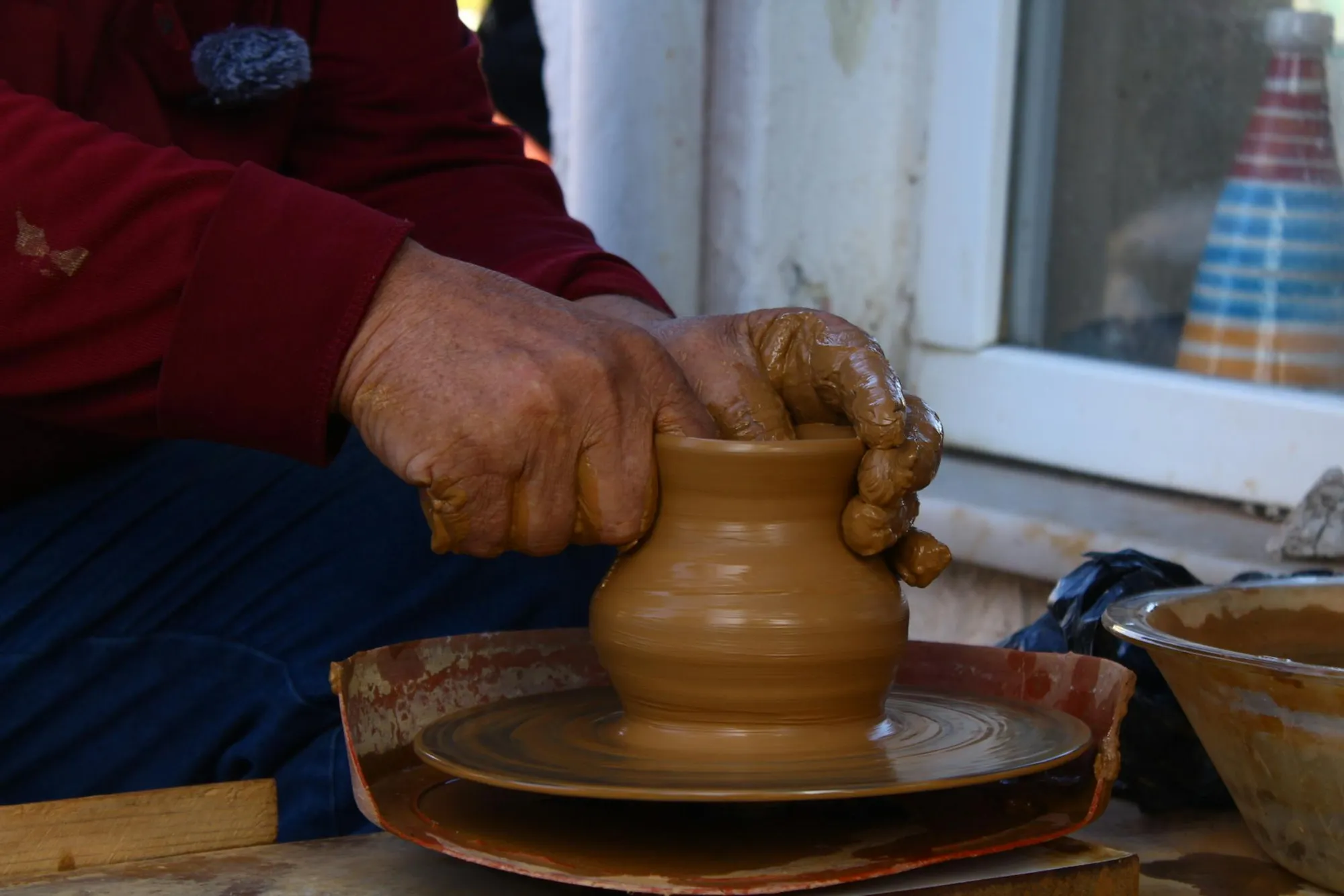
When someone picks up one of your pieces at a fair, turns it over in their hands and asks how much, what answers them when you are not standing there? For most makers the honest reply is: a thumbnail and a number on someone else’s platform. A handmade goods maker website changes that answer entirely. It is the difference between a customer who falls in love with the work and one who quietly compares your price to a stranger’s and walks.
That gap matters more than any other decision you will make about selling online. The piece you spent an afternoon at the wheel on deserves more than a row in a grid, and the buyer who would happily pay sixty francs for it deserves a reason that goes beyond the eight-franc version. This is about what your own shop actually has to do to give them that reason - to make the work feel worth its price and turn a browser into a buyer or a commission - and why, across Switzerland and Italy, the makers building real businesses are the ones who stopped renting their shopfront and built one they own.
The job your website is really doing
Here is what most makers get backwards. They think the website’s job is to display products. But the product, oddly, is the easy part - a photo and a price, which a marketplace already shows perfectly well. What your own site is really doing is answering the question that lets you charge more than a factory ever could:
Why is this worth it, and why from you?
A mass-produced bowl costs eight francs and nobody asks who made it. Your bowl costs sixty, and the buyer absolutely asks. They are not paying for clay and glaze; they are paying for the hour at the wheel, the imperfection that means a human did it, the small story they get to tell when a guest picks it up at dinner. Strip that story away and you are left selling sixty-franc clay against eight-franc clay, which is a fight you lose. Your website is the one place online where you get to put the story back. The maker, the process, the why - that is the product as much as the object is.
And that story sells in seconds, mostly on a phone, mostly before anyone reads a full sentence. A site that loads instantly, photographs the work like it matters, and shows the hands behind it says “this is the real thing” before a price is even seen. A site that is slow, generic, or indistinguishable from a dropshipping store says the opposite - and the buyer goes back to the marketplace, where at least everything is cheap.
People do not just buy what a maker sells. They buy the maker. Get that one idea into the bones of the site and everything else follows.
Why a marketplace and an Instagram grid are not enough
We hear the same line constantly: “I’m on Etsy and I post my work - isn’t that covered?” It is a reasonable thing to think, and the answer is no - not because you are doing too little, but because of who owns what.
Take the marketplaces first - Etsy above all, plus Amazon Handmade and the smaller craft platforms. They do one thing brilliantly: they sit you in the path of someone who has already decided to buy something handmade and is just choosing whose. Keep using them for exactly that. But be clear-eyed about the bargain. Etsy takes a listing fee, then a transaction fee, then a payment fee, then asks you to pay again for ads to be seen at all on the platform you are already paying for. By the time a thirty-franc sale clears, a meaningful slice is gone. Worse, the buyer thinks they bought it “on Etsy.” Their loyalty, their email, their next order - those belong to the platform, not to you. Think of it as a table you book at a craft fair: the footfall is real and you may sell out, but you do not set the door price, you cannot stop the booth beside you undercutting you, and when the fair packs up nobody who bought from you is yours to invite back.
Instagram is the other half of the confusion, and the more seductive one, because it feels like yours. It is not. A well-shot reel of a piece coming off the wheel can do beautiful numbers, and stories are perfect for “just finished” and “two left.” But the reach is rented, the algorithm decides who ever sees you, a post is buried within a day, and nobody completes a hundred-franc purchase inside an app built to keep them scrolling. Instagram is the top of the funnel. Its entire job is to send an interested person somewhere they can actually buy and actually commission. That somewhere needs to be a site you own.
Your website is the only thing on that list you control outright. You decide how it looks, what story it tells, how fast it loads, what it ranks for, and what happens when someone wants a custom piece. It is open at midnight when someone is hunting for a wedding gift with meaning. It works while you are in the workshop with your hands full of clay. And every sale, every commission enquiry, every email address stays yours - no fee per order, no middleman, no algorithm deciding your week.
What belongs on a handmade goods maker website
A maker’s site really has two jobs: make the work feel worth its price, and make acting on that feeling effortless, whether that means buying a piece or asking you to make one. Get those two right and the rest is detail. Here is what belongs on the page, more or less in the order a visitor runs into it.
A curated showcase, not a dumped catalogue
The instinct is to upload everything. Resist it. A marketplace shows a hundred near-identical listings because that is its model; your site should feel like a small, intentional collection where every piece looks chosen. Group by what a buyer actually shops for - tableware, vases, jewellery, whatever your work is - and let the photography breathe with space around it. Fewer pieces, shown larger and better, read as more valuable than a cramped wall of thumbnails. The showcase is where the buyer first decides whether you are an artist or a stall, so it has to look like the former.
Product pages that make the piece feel handled
Each piece deserves a real page, not a row in a grid. A full gallery from several angles, because online the photography is doing all the touching the buyer cannot. The dimensions, the materials, the weight, the small honest note that each one varies slightly because it is made by hand - that last line reassures rather than worries, once you frame it right. A clear price. And the practical truths a handmade buyer always wants: is it food safe, is it dishwasher safe, how do I care for it, how is it packed and posted so it arrives in one piece. The page should make someone feel the object in their hands, then make buying it effortless.
Made-to-order reservation, not just “in stock”
Most makers cannot hold deep stock, and they should not have to. Plenty of your best work is made to order. The site should handle that honestly: a piece can be reserved with a deposit and a realistic lead time - “made to order, ships in three to four weeks” - so you are funded before you fire the kiln, and the buyer knows exactly what they are waiting for. This is also how you stop the marketplace habit of either overproducing on spec or disappointing someone who wanted the sold-out piece. Reservation turns “out of stock” from a dead end into a sale.
A gifting path, because half your buyers are giving it away
A large share of handmade purchases are gifts, and gift buyers behave differently from buyers shopping for themselves. They worry about arrival dates, they want it to look special out of the box, and they often do not know the recipient’s exact taste. Serve them directly. A clear note on lead times and last-order dates before a holiday saves you a dozen anxious emails. The option to add a handwritten card, gift wrapping, or to have it sent straight to the recipient removes the last hesitation. Even a small “gifts under 50” or “ready to ship” edit, surfaced near a holiday, catches the buyer who loves your work but cannot wait three weeks for a made-to-order piece. Handmade and gifting belong together; a site that ignores the gift buyer leaves real money on the table every December.
A custom commission request, the highest-value page you have
This is the part most maker sites either bury or skip entirely, and it is the one that pays best. Someone does not want a piece you have - they want a piece you will make for them. A christening bowl with a date on it. A set of six matching plates for a new kitchen. An engagement ring from their grandmother’s stones. A dedicated commission request should collect what you actually need to quote: the idea in their words, a rough budget, a timeline, and a couple of reference images they can upload. That enquiry lands in your inbox, you reply with a quote, and you have begun a relationship a marketplace listing can never start. Commission work carries your best margins, takes you out of price comparison entirely, and tends to bring the customers who come back. It earns its own section later on, because nothing else on the site rewards a maker as well.
The maker story, told properly
An “about” page on most sites is a throat-clearing exercise. On yours it is a selling page. Who you are, where you work, how a piece is actually made, why you do it this way. Show the studio. Show your hands in the clay or at the bench. A short video of the process is worth a paragraph of adjectives. This is not vanity - it is the single thing that justifies your price and separates you from a faceless store. Buyers who read a genuine maker story spend more and haggle less, because by the end they are not buying an object, they are buying into a person.
Proof and reassurance near the work
A few quiet signals tip the decision: real reviews with the buyer’s first name, photos of pieces living in customers’ homes, any press or stockists, a plain shipping and returns page, and visible Swiss or EU hosting and privacy so a careful buyer feels safe handing over a card. Specifics beat slogans. “Lovingly crafted” means nothing. “Over 400 pieces shipped, packed in plastic-free wrap, posted within two days” means everything.
If you would rather see all of this assembled into one coherent shop than read it as a list, we built a complete demonstration you can click through: see the live demo. It is a fictional studio, but every flow - showcase, product page, made-to-order reservation, commission request and maker story - is real and working.
How a handmade goods maker website converts
All the right pages and the shop can still sell nothing. The distance between a site that photographs beautifully and one that actually moves work is a few unglamorous habits most makers never get around to.
Photography is your entire conversion engine. This matters more for handmade work than almost any other trade, because the buyer cannot touch the piece and the whole premium rests on craft they have to see. Dark, flat, cluttered phone snaps will sink even excellent work. Natural light, a clean background, several angles, a detail shot of the texture or the maker’s mark, and ideally one image of the piece in a real setting so the buyer can imagine it home. Then build a site that shows those images large and loads them fast. Here the site is just a frame; the photographs do the selling, and good design means you barely notice the frame at all.
The story has to be load-bearing, not decorative. A line of it on the homepage, a thread of it on each product page, the full version on the about page, a glimpse of process in the photos. A visitor who never learns who made the thing has no reason to pay your price over a marketplace’s. Weave the maker through the whole journey, not just one tab nobody clicks.
Make the next step obvious and singular. Each page should offer one clear thing to do: buy this piece, reserve this made-to-order, or request a commission. Not a clutter of competing buttons - one. The commission form especially should feel like an easy, friendly invitation, not an interrogation. Ask for the idea, the budget, the timeline and an image, and stop there. Every extra field loses you a serious enquiry.
Speed and mobile decide whether anyone sees the work at all. Your visitor is usually thumbing in from an Instagram story, between other things, and patience is thin. If your hero photo is still loading after a few seconds, a chunk of those people have already tapped back to the feed - and a maker’s site that hides its photography behind a slow load is sabotaging the one thing it exists to show. A bloated, plugin-heavy build does exactly that, and it does it on every single visit.
Answer commission enquiries fast. Not strictly a website feature, but the site sets it up. A commission request you reply to within a few hours, while the buyer is still excited about the idea, converts far better than one you get to next week, by which point the moment has passed and they have moved on. Build the site so every enquiry hits your inbox the instant it is sent, and treat that inbox like the income it is.
If you name the single highest-value action on the whole site, it is the custom commission enquiry. A stock sale is good money once. A commission is better money, repeatedly, from a buyer who chose you specifically - and it is the thing no marketplace and no Instagram grid can hand you. Everything else on the site can be quietly optimised to feed that one form.
Organic versus paid: where a maker’s money actually goes
Sooner or later it comes down to “how do people find the shop?” Two answers, two completely different clocks, and a maker building something lasting uses both - in the right proportion and the right order.
Organic traffic is what you earn rather than rent: people who search “handmade [your craft],” who find you through a gift guide, who type your studio’s name straight into Google because they saw your work and remembered it. It builds slowly. A new shop does not rank in a week, and the content and reputation that lift you take months to compound. But it is the best return in the whole business, because once it works it keeps working, it carries no per-click cost, and the trust is real. A maker with a year of solid organic presence has built an asset that pays while they sleep. This is exactly where a fast, well-structured site with real product pages and a genuine story earns its keep - it is the ground everything else stands on. Pinterest deserves a specific mention here too: for handmade work it behaves more like a slow search engine than social media, and a single well-pinned piece can send buyers for years.
Paid traffic is the mirror image: instant, and rented. Instagram and Facebook ads are the natural fit for visual handmade work - you can put a beautiful reel of a piece being made in front of exactly the people most likely to want it, and point them straight at the showcase or the commission page. A modest budget around gifting season, pushed at your best photography, can pay for itself. Google Shopping has its place for in-stock pieces with clear search demand. The catch never changes: the visits stop the moment you stop paying, and you are renting attention you could have been building.
For almost every maker the order matters more than the split. Get the shop genuinely good before you spend a centime on ads, because the ad only ever delivers someone to the door - it is the story, the photography and the loading speed waiting on the other side that decide whether that Instagram tap turns into a sale or a commission. Once the shop earns its clicks, a tight push at the gifting peaks, aimed at your commission page rather than your bestseller, tends to be where the money comes back. Underneath all of it, your organic presence and your Pinterest pins keep accumulating, so each year you can lean on the ad budget a little less. The paid spend rents you a busy week; the organic foundation is the thing you actually own, and over time it does the heavier lifting for free.
Ready-made or built from scratch?
So the site clearly matters. The last real choice is how you get one, and honestly, for most makers the traditional bespoke route is the wrong default - it is the workshop equivalent of forging your own tools before you have made a single piece to sell.
A custom build means months of waiting and a five-figure invoice, most of it spent paying a developer to rebuild product pages, a reservation flow, a commission form and a checkout that already exist in a thousand other shops. You carry the risk, the timeline drifts, and at the end you own a codebase you now have to keep updated and secure yourself, forever, instead of making things. A handful of makers genuinely need that - a large studio with unusual requirements. Most do not, and most quietly regret it.
The alternative is a productised, ready-made site: a handmade shop that is already built, tested and complete, which we then make unmistakably yours. The structure is proven because it has been refined across many makers, not invented from scratch for you to debug. You go live in days, not months. You pay a sensible one-time setup and a flat monthly fee that covers hosting, maintenance, security and small changes - and, unlike every marketplace you might otherwise lean on, 0% commission on the pieces and commissions it sells. It stays fully customisable: your brand, your palette, your story, your photography, with bespoke touches added later if your studio outgrows the basics. Starting from something proven gets you selling sooner; it never boxes you in.
That is precisely the model behind our ready-made handmade goods maker website - one of a whole line of ready-made websites for specific industries. You get the shop a custom build would have given you, without the months and the five-figure gamble, and you can be taking orders and commission enquiries next week instead of next quarter, keeping every franc of every sale.
Where to start
If you take one thing from all of this, make it the commission page. Most makers pour their energy into showcasing stock - the part a marketplace already handles - and neglect the one page that brings the high-margin, repeat, you-specifically work that actually builds a business. Get a fast, story-rich shop live, point a small, well-shot Instagram push at a clean commission funnel, reply to every enquiry while the buyer is still excited, and you have a quiet machine that compounds while you do the work you are genuinely good at.
The hard part used to be getting the shop built at all. It is not anymore. The shop is ready, it works, and it can be wearing your brand, telling your story and keeping all of your money in a matter of days.
Frequently asked questions
- How much does a handmade goods maker website cost?
- A custom build runs well into five figures and takes months. A ready-made, productised site like ours is a one-time setup plus a low all-inclusive monthly fee covering hosting, maintenance, security and small changes - the current figure is on the solution page. Unlike a marketplace, there is no commission skimmed off each sale or commission enquiry.
- I sell on Etsy and post on Instagram. Do I still need my own website?
- Yes, because they do a different job. Etsy puts you in front of buyers already shopping, then takes its cut and owns the relationship. Instagram builds the audience but rents you the reach. Your own site is where someone decides you are worth the price and worth a commission - and where the sale, the margin and the customer all stay yours.
- How long before my handmade shop is online?
- A ready-made shop goes live in a few working days. We set up your brand, your colours and your maker story, you load your pieces and photos from a simple dashboard, and it is live. A bespoke project, by contrast, is usually a two to four month commitment before a single customer sees it.
- Can customers request a custom commission through the site?
- Yes, and it is the page that pays best. A dedicated commission request collects the idea, the budget, the timeline and reference images, then lands in your inbox - no marketplace fee, no middleman. Made-to-order pieces can also be reserved with a deposit so you are not making on spec.
- Do I have to keep updating it myself?
- Only the parts you want to. Adding a new piece, swapping the hero photo or marking something sold takes a couple of minutes from the dashboard. Hosting, security, updates and the technical upkeep are all handled for you and included in the monthly fee, so the craft stays your focus, not the software.