












The Painting and Decorating Business Website That Works
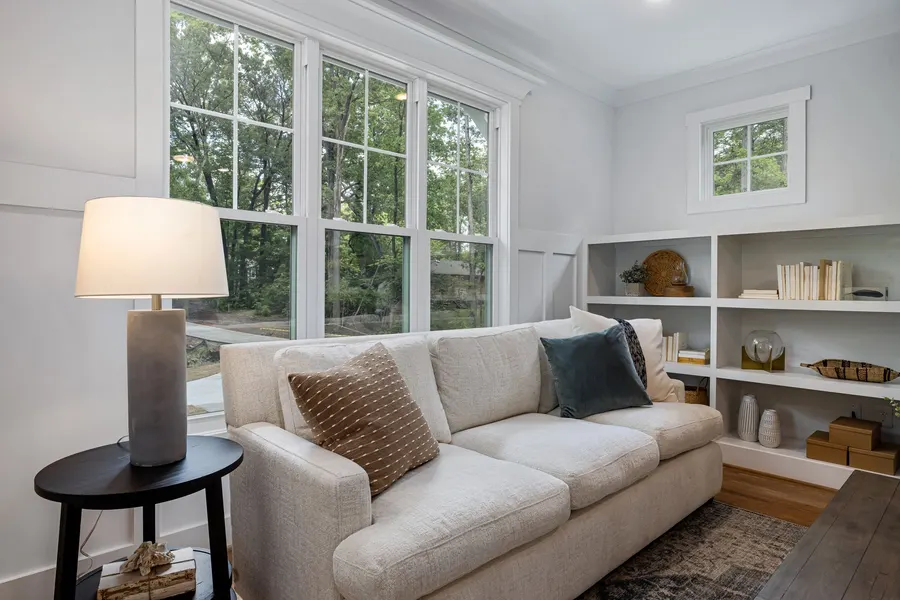
Think of the moment a client walks into a freshly finished room. They do not read your CV on the wall. They run an eye along the line where the colour meets the ceiling, touch the smooth skin of the paint, breathe in a space that suddenly feels cared for, and decide in three seconds that you knew what you were doing. A painting and decorating business website is that first step over the threshold, except it happens before you have ever met. It is the room a prospect stands in while they make up their mind about you.
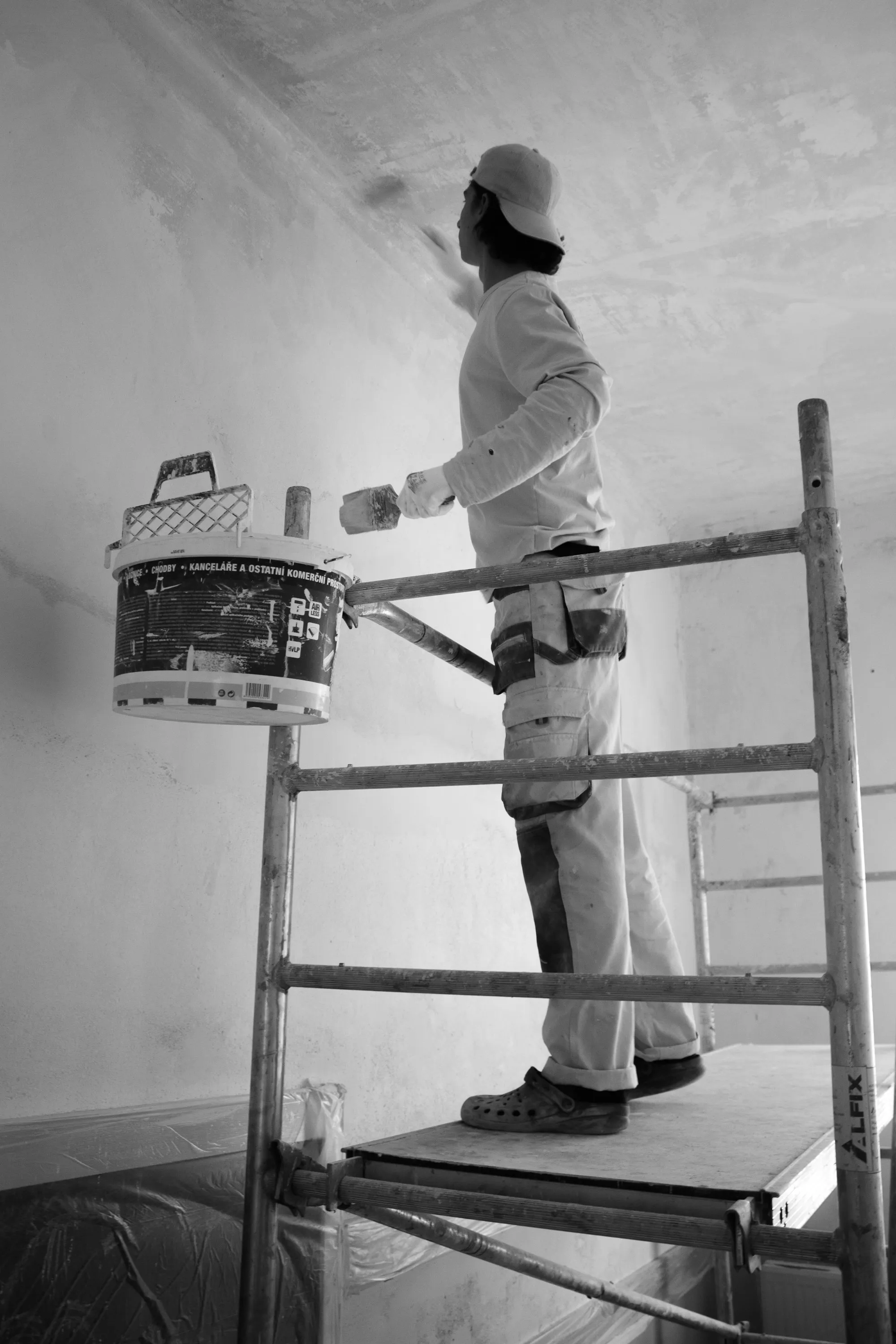
Make that literal and it changes everything. The site is not a leaflet with a phone number and a stock shot of a roller, nor a Facebook page the platform really owns. It is a finished space you control completely: walls hung with the true quality of your work, a clear word that you are insured and tidy, the voices of clients you have already pleased, and a way to ask for a price in under a minute by photographing the wall. The pages that follow walk through what that space has to contain and how someone who steps in becomes a booked job. Across Switzerland and Italy, the painters landing the work worth having are simply the ones who treat the site as a room they have decorated with care, not a box to tick.
The thing painting clients are really judging
Here is what most painting websites get wrong. They lead with words. “Professional painting services. Quality workmanship. Free estimates.” Every competitor says the identical thing, so it lands as noise. Meanwhile the one thing that actually decides whether someone trusts you is sitting in a folder on your phone: the photos of jobs you have already finished.
In this trade, seeing the work is the whole sell. A homeowner cannot judge the quality of a paint job from a slogan. They can judge it instantly from a clean cutting-in line against a ceiling, a perfectly even feature wall, a tired stairwell transformed into something they would want to come home to. Show them ten of those and you have said more than a thousand words of marketing copy ever could. Hide them behind a “view portfolio” link that opens three blurry images and you have undone yourself.
And there is a second judgement happening underneath the first, quieter but just as decisive. Painting is intimate in a way a lot of trades are not. You are not fixing a boiler in an hour and leaving. You are in someone’s home for days, moving their furniture, generating dust, working in rooms full of their things, often while they are out at work. So before they call, they are weighing a worry they will rarely say out loud: can I trust these people in my home, and will they leave it clean? Your website either answers that - with real faces, real reviews mentioning how tidy you were, a clear word about being insured - or it leaves the worry sitting there, and the homeowner clicks the next name.
Get those two things right - visible quality and visible trust - and most of the job is done before anyone fills in a form.
Why a Facebook page and a trade listing fall short
Painters tell us this constantly: “We post our jobs on Facebook and Instagram, and we’re on a couple of trade sites - isn’t that enough?” Fair question. The answer is no, and it has nothing to do with how hard you are working at it.
Social media earns its place in this trade more than in most, simply because the work photographs so well. A before-and-after reel of a dingy lounge turned bright and modern can travel a long way. Stories suit “starting a full repaint this morning” and the finished room that evening. Keep posting. Just be clear-eyed about what you are standing on: borrowed ground. Whether your followers even see a post is the platform’s call, your best job of the month has sunk out of the feed by tomorrow, and that audience was never really yours to keep. No homeowner signs off a three-week repaint on the strength of a Reel anyway. A post grabs a glance and points somewhere - and the somewhere it should point is ground you own outright.
Trade directories and lead-generation platforms - the ProntoPro, Houzz, MyHammer, Quotatis type of service - are the other half of the misunderstanding. They put your name in front of people actively looking for a painter, which is worth something. But you are usually paying per lead or per contact, you are listed in a row beside every competitor in your area, and the same enquiry has often been sold to four other firms at the same time, so you are in a price race before you have said a word. Worse, the relationship belongs to the platform. The customer found “a painter on the site,” not you. Use these channels if the numbers work, but do not mistake a paid listing on someone else’s marketplace for a presence of your own.
A website is the one piece of all this that belongs to you and stays put. The look, the wording, which finishes you put front and centre, the loading speed, what greets a visitor who wants a price - all of it is yours to set. It stays open at eleven at night, when a couple finally sits down to plan redoing the kids’ rooms, and it keeps selling while you are halfway up a ladder. Nobody skims a fee off the top, no enquiry gets quietly resold to four rivals, and no feed ranking decides how busy your week is. Every visit, every review someone reads, every photo quote that lands - yours, full stop.
What goes on a painting and decorating business website
A painter’s site lives or dies on two things: proving the quality of the work, and making it effortless to ask for a price. Everything else supports those. Here is what earns its place, roughly in the order a visitor meets it.
A before-and-after portfolio that does the talking
This is the heart of the whole site, so treat it that way. Not a thumbnail grid tucked in a corner - a proper gallery, organised by the kind of work a client recognises: interior repaints, exterior and facade work, feature walls, stairwells and hallways, kitchens, commercial and office jobs, restoration of older properties. The before-and-after pairing is the single most persuasive format you have, because it shows not just a nice result but the transformation - the dingy room they recognise from their own home, then the version they wish they had.
Two things make or break it. First, the photos have to be good and they have to be big - shown at full size, sharp, well lit, true to colour. A perfect job in a dark, crooked phone snap looks like a mediocre one. Second, organise it so a visitor can find work like theirs in two clicks. Someone planning to repaint a townhouse exterior does not want to scroll past forty interior shots. Let them filter to what they came for, and let them feel the standard you hold.
A services page that speaks plainly
Homeowners are not painters. They do not know the difference between two coats of trade emulsion and a proper sealed-and-primed job, and they should not have to. Your services page should lay out what you actually do in language a client uses: interior and exterior painting, wallpapering and wall coverings, decorative and specialist finishes, plaster repair and surface preparation, woodwork and trim, ceilings, damp and stain treatment, colour consultation. Spell out what is included - that you fill, sand and prep properly, that you protect floors and furniture, that you clean up at the end - because the careful firms get tarred with the same brush as the cowboys, and saying it plainly sets you apart.
Finishes and techniques, shown not just listed
This is where you separate yourself from the firm that only does flat white walls. If you offer the more skilled work - lime wash, Venetian plaster and polished stucco, microcement, spray finishes, wood staining and graining, heritage and listed-building work, specialist anti-damp or anti-mould systems - give it room and, crucially, photos. These are the higher-margin jobs, and the client who wants them is specifically searching for someone who can prove they have done it before. A line saying “we offer decorative finishes” converts nobody. Three close-up photos of a beautifully troweled Venetian plaster wall converts the exact client you most want.
The photo quote request - the page that pays
Now the part that matters most, and the part most painting sites either bury or skip. The single highest-value action on the whole site is a homeowner asking you for a quote - and the way to get far more of them is to make it ridiculously easy.
The format that wins for this trade is a photo quote request. Instead of forcing the visitor to describe a job they do not have the vocabulary for, you let them show you: a short form where they pick the type of work, say roughly how big the space is, and upload a couple of photos of the walls, the room, the facade. That is usually enough for you to come back with a sensible ballpark and book a proper site visit. It is faster for them, it pre-qualifies the lead for you, and it filters out the time-wasters - someone who photographs three rooms and uploads them is a serious buyer. Make this the most prominent thing on the site, reachable in one tap from every page. We will come back to it, because nearly everything else exists to push people toward it.
Reviews and references, near the action
Word of mouth is how painting work has always travelled, and a website is where you scale it. Genuine reviews - ideally pulled through from Google, with names and the type of job - do more heavy lifting here than almost anywhere. But placement matters as much as having them. A wall of testimonials on a separate “reviews” page that nobody visits is wasted. A short, real review sitting right beside the quote button - “spotless, on time, you would never know they had been here except the house looked new” - is what tips a hesitant visitor into submitting. References from past clients, and the offer to put a prospective client in touch with one, close the bigger jobs.
The trust essentials: insured, tidy, reliable
A handful of plain facts settle the nerves that stop people calling. State clearly that you are insured and properly registered. Put real faces and names to the team - people relax when they can see who is coming into their home. Mention how you work: dust sheets down, furniture protected and moved back, a clean site at the end of each day, a firm finish date you stick to. If you carry any trade accreditation or manufacturer certification, show the badge. None of this is glamorous, and all of it works, because it speaks directly to what a nervous homeowner is actually worried about.
If you would rather see all of this assembled into one coherent site than read about it in a list, we built a complete demonstration you can click through: see the live demo. It is a fictional painting and decorating firm, but every flow - the before-and-after gallery, the finishes, the reviews, the photo quote request - is real and working.
The painting and decorating business website at work
The right pages are necessary. They are not sufficient. The gap between a site that looks tidy and a site that fills your diary comes down to a few unglamorous details.
Speed and mobile come first. The person hunting for a painter is almost always on a phone, quite possibly standing in the very room they want done, attention split three ways. Make them wait four seconds for the page and a chunk of them are gone, back in the results before your first photo has even drawn. Since the photos are the entire pitch, they have to come up quickly and stay crisp on a small screen. A bloated, plugin-heavy site that grinds along on mobile data leaks you jobs week after week, quietly, without you ever seeing the ones you lost.
Let the photos breathe. Your before-and-afters are doing the selling, so the site’s job is to get out of their way: full-width galleries, fast loading, true colour, no clutter crowding the images. Invest a little in shooting your finished jobs properly - decent light, straight lines, the whole room - and build a site that shows them at their best. This is the highest-return effort you can make.
Make the next step one obvious thing. Every page should point at the same action: get a quote. Not five competing buttons, not a phone number hidden in the footer and a contact form three menus deep - one obvious “request a quote” that travels with the visitor down the page. The photo quote form especially should feel like a favour you are doing them, not an interrogation. Fewer fields, plain language, the photo upload front and centre. Every extra box you add is a few more people who give up.
Answer fast, win the job. This is not strictly a website feature, but the site sets it up. Painting clients are usually getting two or three quotes, and the firm that replies first and books the site visit soonest very often wins - not because they are cheapest, but because they showed up. Build the site so every photo quote request hits your inbox or phone the instant it is sent, and treat a same-day reply as the standard. A request you answer tomorrow afternoon is frequently a job someone else already booked.
Put the proof next to the button. A real review, an “insured” line, a recognisable certification badge, a friendly face - placed right beside the quote form, not buried on an “about” page - measurably lifts how many people actually submit. People hand over their details and let strangers into their home when they feel like they are dealing with real, accountable people rather than a faceless company.
There is no trick in any of this. Painters just skip it, busy on site, which is exactly the gap a firm that gets it right walks straight through.
Where the work comes from: organic, paid, referral
A site nobody finds books nobody. So the next question is where the visitors come from, and for a painter it is three places, each behaving nothing like the others. Get the mix right and they feed each other.
Organic and local search is the big one for this trade, and it is where your money goes furthest over time. Most painting jobs start with someone searching a service and a place - “exterior painters,” “decorator,” “wallpaper hanging” - or looking at the map pack of nearby firms with their reviews. A claimed and well-tended Google Business Profile, paired with a fast, genuinely local website and a steady trickle of real reviews, is what gets you into that map and that list of results. It is slow to build - a new site does not rank in a fortnight - but once it works it keeps working, and you are not paying per click. An established painter with a year of solid reviews and a sound site has an asset that brings jobs in its sleep. This is where a well-built site earns its keep.
Referral and repeat work is the channel painters underrate as a website job, and it is huge here. A happy client who tells a neighbour does not just say your name - the neighbour then looks you up. If what they find is a sharp site full of beautiful work and glowing reviews, the referral is as good as closed. If they find nothing, or a dead Facebook page, the warm lead cools. Your website is the place that converts the trust someone else built for you. It is also where you nudge it along: a simple way to leave a review, a gallery worth sharing, a reason to recommend you that is easy to act on.
Paid traffic is the fast, rented option. Google Ads can put you at the top of “painters near me” this afternoon - useful in a quiet patch or to win seasonal work like exterior jobs before the warm months. Local Services-style ads, where they exist in your market, put you straight in front of nearby searchers. Meta - Facebook and Instagram - leans on your visual work: a striking before-and-after shown to homeowners in your area can fill a slow week. The catch is the usual one: the moment you stop paying, the leads stop, and every paid click lands on your site, so a slow or unconvincing site burns the money. Build the site properly first, lean on organic and referral as the foundation, and use paid in bursts to smooth out the quiet stretches. Paid buys you this week. Organic and referral buy you every season after.
Ready-made or built from scratch?
Say you accept all of that. One question is left, and it is the one that stalls most painters: do you commission a site or buy one that already exists? For a painting and decorating firm, the old reflex - hire someone to build it from nothing - is usually the wrong one.
Picture the bespoke route honestly. A developer spends three or four months and bills you five figures to build, from scratch, the very things every painter’s site contains: a photo gallery, a services layout, a reviews block, a quote form. All of it has been made thousands of times over. While it drags on you wait, the budget creeps, and when it finally ships you are handed a stack of code that is now yours to host, patch and keep alive - until the day it quietly stops working and you are back paying someone to fix it. A handful of unusually large firms genuinely need a one-off build. A painting and decorating business almost never falls into that group.
So consider the other path: a ready-made, productised site - a painter’s website that is finished, tested and only waiting to be dressed in your brand. Nothing is being invented; the gallery, the photo quote flow, the trust signals and the loading speed have already been worked out over many trade sites, so what you inherit is the proven version. It is live within days. The cost is an upfront setup plus one flat monthly fee, and that fee swallows the lot - hosting, security, maintenance, the odd small change you need made. The lead platforms painters keep getting pushed toward take a cut of every job; here, nobody touches the quotes that come through - they are entirely yours. And “ready-made” never means “stuck”: your colours, your logo, your projects and your voice go on top, and bespoke work can be bolted on later if the business outgrows the base. It is a running start, not a cage.
This is precisely the idea behind our ready-made painting and decorating business website, part of a whole range of ready-made websites for specific trades. What a custom build would eventually have delivered, you get now - minus the lost quarter and the five-figure bet - and you could be fielding photo quote requests by next week.
Where to start
So where do you actually begin? With the photo quote request, before anything else. A painter can polish the wording all week - “professional,” “reliable,” “free estimates” - and it changes nothing, because every rival writes the same. What moves the needle is one humble thing: a homeowner can photograph the wall and have a price back the same day. Build around that. Fill the gallery with your sharpest before-and-afters, keep the pages fast, feed them with local search and the occasional paid push, and answer every request before a competitor does. The diary fills itself while you stay on the ladders.
For years the obstacle was simply owning a good site - the cost, the wait, the developer you had to chase. That obstacle is gone. The site already exists and already works; in a matter of days it can carry your name and start collecting quote requests for you.
Frequently asked questions
- How much does a painting and decorating business website cost?
- A custom build runs into five figures and takes months. A ready-made, productised site like ours is a one-time setup plus a low all-inclusive monthly fee covering hosting, maintenance, security and small changes - the current figure is on the solution page. There is no commission on the quote requests the site brings you, so a single repaint usually covers a year of it.
- I post my jobs on Instagram and Facebook. Do I still need a website?
- Yes, and they do different jobs. Social is great for showing a fresh finish to people who already follow you, but you are a guest on someone else's platform and a post is gone within a day. When a homeowner is about to hand strangers the keys and let them work unsupervised for a week, they look you up properly - reviews, real projects, proof you are insured. That check happens on a website you own, not on a feed an algorithm controls.
- How long before it is online?
- A ready-made painting and decorating business website goes live in a few working days. We set up your brand, colours and services, you upload your best before-and-after projects, and it is live. A bespoke project, by contrast, is usually a two to four month commitment before anyone sees a single page.
- Will it actually bring me quote requests, or just look nice?
- It brings requests if it is built around one. The highest-converting feature for a painter is a photo quote form - the visitor describes the room, uploads a couple of photos of the walls, and you get enough to reply with a ballpark and book a site visit. Pair that with fast loading, honest project photos and reviews near the button, and a quiet site turns into a steady stream of jobs.
- Who keeps it updated and secure once it is live?
- We do. Hosting, security patches, backups and the monitoring that keeps it fast are all included in the monthly fee - you never touch a plugin or a server. Adding a new project gallery or editing your services is a simple message to us or a quick edit in a dashboard. You spend your time on ladders and dust sheets, not on website maintenance.