












The Veterinary Practice Website That Fills the Diary
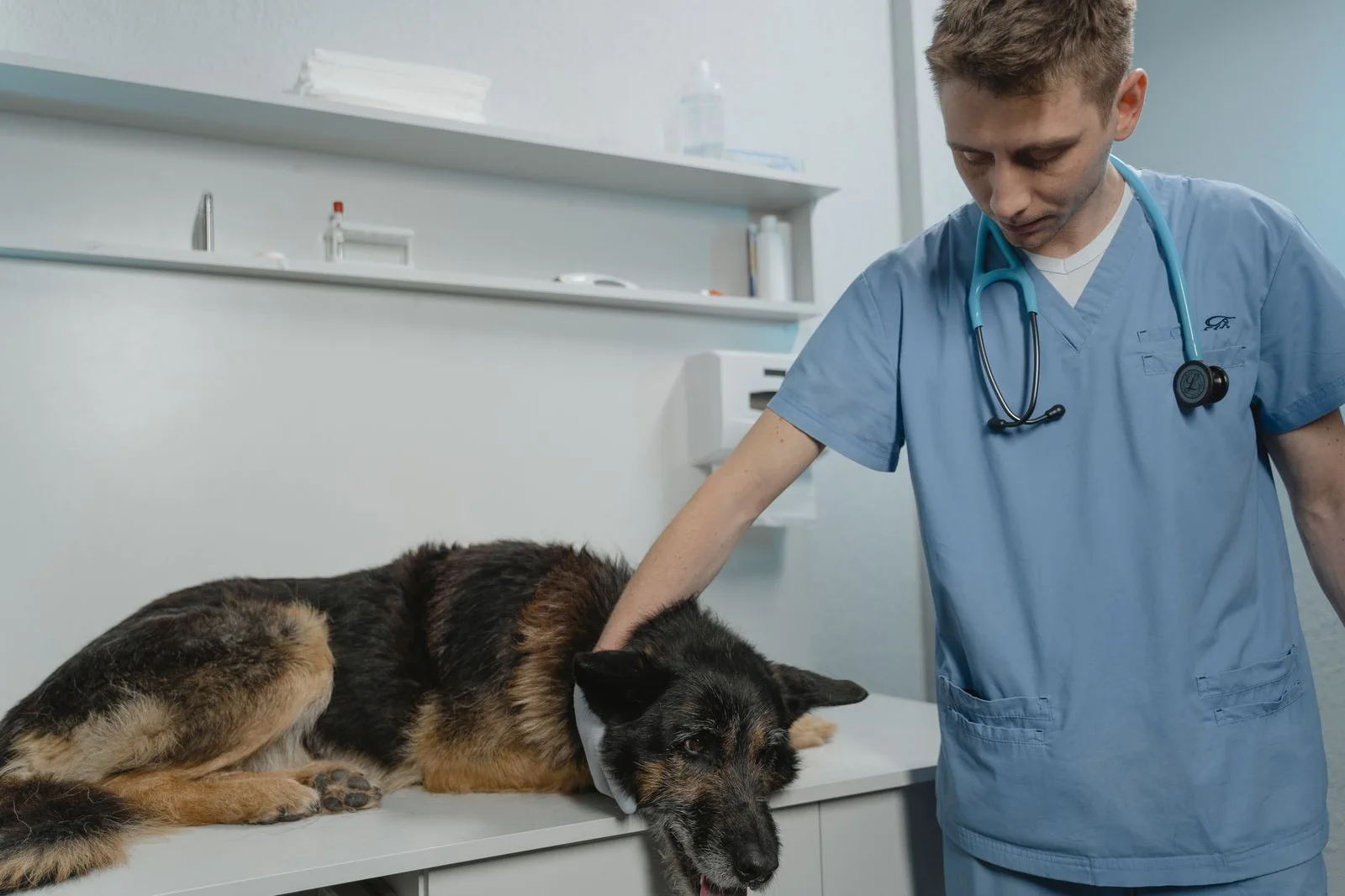
Picture the most common way a new client finds you. The cat has been sick for three days, or the dog keeps pawing at its ear and whimpering in the evening, and the owner reaches for their phone and types “vet near me” or “emergency vet open today.” Up comes a map with three or four names, a scatter of star ratings, then a wall of directories. They tap the first clinic that looks competent and offers a way to book without twenty minutes on hold. Whoever answers that moment well wins a client who may stay for fifteen years, come back for every vaccination and every emergency, and bring the second animal, the child’s dog, the sister’s cat. The clinic with a fast, reassuring veterinary practice website wins; the one with a slow, dated, phone-only page loses them before the screen has even loaded.
A veterinary practice website is how you make sure that owner lands with you and not the practice down the road. Not a brochure that has sat untouched since 2018, and not a single Facebook page you do not really control, but a proper clinic site of your own: somewhere a worried newcomer can work out who you are, an existing client can rebook a check-up in seconds, and someone with an emergency instantly finds how to reach you. This guide is about what that site actually needs to do, what turns an anxious owner into a booked visit, and why - across Switzerland and Italy - the clinics keeping their diary full are the ones that treat their website as a working tool rather than a digital business card.
How an owner with a sick animal actually chooses
Here is what most veterinary sites get wrong. They lead with the clinic’s history, the founding year and a stock photo of a puppy bounding through a meadow, as if the owner’s first concern is your backstory. It is not. Someone arriving at your site almost always has, in their arms or on their mind, an animal that is unwell, and their first question, sitting unspoken behind almost every visit, is closer to this:
Will they see him quickly, will they know what to do, and will they be kind to him and to me?
An animal owner is not an ordinary customer. For a great many people the dog or the cat is a full member of the family, and when it is unwell the anxiety is real, immediate and not especially rational. That worry is the single biggest thing standing between a visitor and a booking - bigger than price, bigger than location, bigger than your equipment. A site that answers it well converts. A site that ignores it, however slick, leaves clients on the table.
This changes what your homepage should do in its first few seconds. Real faces and real animals, not logos. A warm photo of the team holding a dog beats any abstract image of a stethoscope. Plain, calm language - “call us and we’ll tell you straight away if we need to see him today,” “nervous animals are our specialty” - does more than a list of specialisations. The clinical credibility matters too, and we will get to it, but it lands far better once the owner already feels heard. Availability first, expertise second. Most clinics have that order reversed.
There is also a practical difference worth keeping in mind. Dog owners and cat owners are not searching for the same thing, and the cat in particular is a famously under-treated patient: many cat owners put off the visit because the carrier is a nightmare and a waiting room full of dogs terrifies the animal. A clinic that says clearly on its site how it handles cats, perhaps with dedicated hours or space, speaks to a whole segment of guilty owners who do not know where to turn. These are small details, but they are exactly what makes people choose you.
Why a directory and a Facebook page are not enough
Plenty of vets tell us the same thing: “We’re on the directories, we have an active Facebook page, we post our patients’ photos - surely that covers it?” Fair question, and the answer is no, for reasons that have nothing to do with effort and everything to do with who owns the client.
The directories and review platforms are good at one narrow thing: putting your name in front of someone already searching for a vet. Use them - a complete, well-rated Google Business Profile is genuinely important, and the local directories carry weight. But understand the deal. You are renting a slot next to your competitors, the platform owns the client’s attention and the review data, and your listing looks broadly identical to the practice two streets over. There is no room there to reassure a frightened owner, explain how you handle an overnight emergency, or show that you care for exotics too. A directory tells someone you exist. It cannot make them trust you.
Then there is Facebook, which a lot of clinics lean on hardest of all. It earns its place: a photo of a recovered dog, a quick tip on removing a tick, the human moments that make a clinic feel approachable - all of it softens the wariness before anyone walks in. What it does not do is hold still. A feed is a river; your best post has floated out of sight by the weekend, you are at the mercy of whatever the algorithm feels like showing, and a viral post has never once filled the diary on a Tuesday morning. Treat social as the friendly chat at the door, not the consultation room. Its whole job is to walk an interested stranger somewhere that converts - and that somewhere is a site whose front door you actually hold the keys to.
Out of that whole list, one thing answers to you and no one else: your own site. The wording a frightened owner meets, the photo at the top, the speed it loads at, the emergency number in plain sight, the exact moment the booking button appears - all of that is yours to set, and none of it is borrowed. It keeps working when the clinic is dark: at eleven at night, when someone is lying awake because the dog is breathing strangely, the site is awake too and tells them where to go. It carries on while your hands are busy on a surgery table. Best of all, nothing it earns is taxed on the way to you - the booking, the recall, the request all land directly in your hands, with no commission skimmed, no per-lead toll, and no feed deciding whether your clients ever find you.
What belongs on a veterinary practice website
A clinic site lives or dies on two things: how easily an owner can book, and how quickly they come to trust you. Everything else supports those. Here is what earns its place, roughly in the order a visitor meets it.
Online booking by animal and by service
This is the feature that moves the needle most, and the one most clinic sites either lack or bury. An owner who has finally decided to book wants to act now - at 10pm, without a phone call, without “please ring during opening hours.” Real online booking means choosing the animal, the visit type and seeing genuine availability, confirming in under a minute, with a confirmation and a reminder to follow. The difference between that and a contact form that promises “we’ll call you back” is the difference between a full diary and a client who has already moved on to the next name in the map pack.
A small but important detail: let people book by reason, not just by clock. “First visit,” “vaccination,” “check-up,” “my animal is unwell,” “health grooming” - each is a different appointment length and a different urgency, and routing them correctly keeps your diary sane and your owners understood. Asking whether it is a dog, a cat or another animal then lets you prepare the visit before it even walks through the door.
A clear, honest emergency route, with 24h information
The animal does not fall ill during office hours. An owner with a genuine emergency is the most motivated client you will ever meet, and also the easiest to lose to whoever answers first or is found fastest. Your site needs an obvious, calm answer to “my animal is unwell right now” - the emergency number clearly stated and tappable from a phone, your on-call hours, what to do if you are closed, who to turn to at night or on holidays, and zero hunting through menus to find it. Even if you do not cover overnight emergencies, saying so clearly and pointing to the on-call clinic you refer to builds enormous trust: the owner remembers who helped them in a moment of panic, and that clinic is the first one they come back to the next day for everything else.
Clinics that handle the emergency well turn a frightened stranger into a loyal client in a single afternoon. Clinics that hide the emergency number behind a generic contact page hand that client to someone else.
Service pages that explain, not just list
A bare list of services - “medicine, surgery, vaccinations, diagnostics” - tells an owner nothing they did not already know. The services that bring real revenue, and real hesitation, deserve a proper page each. Surgery, diagnostic imaging, veterinary dentistry, senior-animal care, feline medicine, exotics: what is involved, how you keep it as low-stress as possible for the animal, what to expect before and after. These pages do double duty. They reassure the worried owner weighing a procedure, and they are exactly what search engines use to put you in front of someone typing “cat neutering cost” or “dog ultrasound” rather than just “vet.” Write them for the anxious human first; the ranking benefit follows.
If your clients are at all international - and in much of Switzerland they are - multilingual service pages stop being a nicety. Someone deciding to trust you with an important procedure on their animal wants to read the details in their own language before they commit.
A page worth singling out is the one for new patients, especially the first visit. Many owners, particularly someone who has just got a puppy or moved to the area, are not sure what to expect and put it off. A short, calm page that walks through exactly what happens at a first visit - how you prepare for a nervous animal arriving, how long it takes, what to bring - dismantles that hesitation better than any promotion. It costs nothing to write and it speaks directly to the people most likely to keep putting the visit off.
The recall for vaccines and check-ups
Now the part almost everyone underrates. In dentistry it is the hygiene recall; in veterinary medicine it is the reminder for the annual vaccine, the senior-animal check, the seasonal parasite treatment, the booster for prophylaxis. It is the bread and butter of the clinic, the predictable recurring revenue, and most practices leave it to a paper diary and the owner’s good memory - which is a polite way of saying they lose it.
A site that automates that recall protects the revenue you have already earned. An owner who gets a gentle reminder that their dog’s vaccine is due next month, with a button to rebook in two taps, comes back. An owner left to their own memory often forgets for a whole year, or takes the animal elsewhere in the meantime. If you make me name the single highest-value action on the whole site, it is not the new client’s first visit, valuable as that is. It is the recall: the automated nudge that brings back an animal you already care for. New clients cost money to win. A client you already have, gently reminded before they drift away, is almost pure profit.
Reviews, credentials and faces
Now the proof. A few things tip the trust decision, and they are mostly visual and human:
- A real team page with names, faces and a sentence of warmth about each person, ideally with an animal beside them. Owners are trusting their animal to specific humans; show them who they are and that they genuinely love animals.
- Honest reviews, ideally pulled through from where clients already leave them. “They saved our dog at two in the morning, with a kindness we won’t forget” from a real person beats any sentence about yourself.
- Genuine credentials and specialisations, stated plainly. Professional registrations, particular skills (surgery, cardiology, behaviour, exotics), the equipment that actually matters to an owner (ultrasound, surgical suite, in-house lab) - facts, not adjectives.
- Real photos of the clinic, not stock. A clean waiting room, a tidy consultation room, a space designed to keep dogs and cats apart: showing the real environment reassures someone about to trust you with their animal.
A practical extra that pays for itself quietly: client accounts. Letting someone log in to see their next check-up, download the vaccination record, or rebook removes a stack of phone calls from your front desk and makes the clinic feel organised and modern. It is not glamorous, and clients rarely mention it, but it is the kind of thing that makes them stay.
If you would rather see all of this assembled into one working clinic site than read about it in a list, we built a complete demonstration you can click through: see the live demo. It is a fictional clinic, but every flow - booking by animal, emergency, service pages, vaccine recall - is real and working.
Making the veterinary practice website convert
Having the right pages is necessary. It is not enough. The gap between a site that looks nice and a site that fills the diary comes down to a handful of unglamorous details.
Speed and mobile come before everything. The person reaching for their phone with a sick dog is not in a patient frame of mind, and they are almost never at a desk. If your homepage makes them wait while a bloated theme drags itself onto a phone screen, you have lost them somewhere around the second or third second, long before any reassuring photo of your team has rendered. Quick to load and effortless on a small screen is not a refinement you add later; it is the thing that decides whether the visit happens at all. It is also the hidden cost of a site stuffed with plugins and trackers - every one of them is a fraction of a second, and fractions of a second are clients.
Make the booking, and the emergency number, the obvious next step, everywhere. A persistent “Book a visit” button that follows the visitor down the page, the emergency number one tap away and in plain sight, both repeated near the bottom of every service description. Not five competing calls to action - one clear route for the owner who wants to book calmly, one for the owner who has an emergency right now. Decision fatigue loses clients; two obvious, distinct steps win them.
Response speed closes the case. The site can hand you the request the instant it is made; what happens next is on you. An owner who hears back quickly, warmly, feels looked after before they have even walked into the clinic. Leave the same message until tomorrow and you are often replying to someone who has already taken the animal to whoever answered first - anxiety does not wait for office hours, and neither does the booking. Wire every form so it lands in front of a real person immediately, and run that inbox the way you would run the phone at the front desk.
Reassurance sits next to the action. A line like “first visit? we’ll talk you through everything calmly, no rush” placed right beside the booking button measurably lifts how many anxious people actually click it. A friendly face near the form, a review about kindness in a hard moment, a plain note on how you handle nervous animals - these are what give a frightened visitor permission to commit.
Reduce the friction in the form itself. Every extra field on a booking is a small reason to abandon it, and anxious people abandon easily. Ask for the bare minimum to confirm the visit - name, contact, animal, reason - and gather the rest when they arrive. The goal at this stage is a committed client, not a complete clinical record.
Organic versus paid: where the budget actually goes
Sooner or later the question becomes “how do people find the site?” There are two answers, they run on completely different clocks, and a sensible clinic uses both - but not in equal measure and not in the wrong order.
Organic traffic is what you earn from search and your own standing - people who type “vet near me,” “emergency vet,” or your clinic name directly. Local search is the bedrock of veterinary marketing, and it leans heavily on a complete Google Business Profile, a steady trickle of genuine reviews, and a fast site with clean service pages that answer real questions. It is slow to build - a new site does not rank overnight - but it is the best value in marketing, because once it works it keeps working, the clients arrive pre-trusting, and you pay nothing per visit. A clinic with a year of solid local presence has built a quiet asset that fills the diary on its own.
Paid traffic is the mirror image: immediate, and rented. In veterinary medicine it works best in two specific situations. The first is the new or newly opened clinic that needs to get known fast in an area where no one is searching for it by name yet. The second is high-value, high-intent services - “neutering,” “emergency vet,” “veterinary behaviourist” - where a well-spent click, pointed at a strong service page and a clean booking, can pay for itself many times over with a single client who then stays for years. The discipline is the same everywhere: the clients stop the instant you stop paying, so always send them somewhere that converts.
The sane order for most clinics is plain. Build the site properly first, because every paid click lands on it and a fast, reassuring page is what turns an expensive click into a booked visit. Then run focused paid campaigns, if you are new or pushing a specific service, while your local organic presence builds underneath. Over a year, the paid spend can ease off as organic and recall carry most of the load. Paid buys you a client today. Organic and recall buy you clients every tomorrow.
Ready-made or built from scratch?
So the site matters - the last real decision is how to get one. For most clinics, the traditional bespoke route is the wrong default, and here is the honest reasoning.
A custom build is a months-long project with a five-figure invoice, in which you pay someone to reinvent online booking, service pages, recall logic and emergency information that have been built thousands of times already. You carry the project risk, the launch date drifts, and the clever parts - the booking that routes by animal and reason, the multilingual service pages, the automated vaccine recall - are exactly the bits that get cut when the budget runs short. At the end you own a codebase you must now maintain, update and keep secure indefinitely. There are clinics for which a full bespoke build is right - large veterinary hospitals with genuinely unusual practice-management systems to connect. Most are not that.
There is a second way, and for most clinics it is the better one: start from a veterinary practice site that already exists. Ours has been built once, then sharpened over and over against how real clinics actually use it - so the hard questions about what works are already settled before your name goes on it, and the wait is measured in days rather than seasons. The commercials are deliberately simple: a sensible one-time setup, then a flat monthly fee that rolls hosting, maintenance, security and the small ongoing tweaks into one figure - and, unlike some platforms vets get nudged toward, not a cent of commission on the bookings it brings. It stays fully yours to shape: your brand, your colours, your team, your services, with bespoke additions later if you grow into them. Starting from something proven does not box you in; it just means the clinic is taking bookings while a bespoke project would still be in wireframes.
That is precisely the model behind our ready-made veterinary practice website - one of a whole line of ready-made websites built for specific industries. You get the clinic site a custom build would have delivered, without the months and the five-figure risk, and you can be taking bookings next week instead of next quarter.
Where to start
If you take one thing from all of this, hold two together: answer the fear of the emergency moment, and never lose the client you already have. Make it obvious and instant how to reach you when an animal is unwell, so the panicked owner chooses you, then automate the recall for vaccines and check-ups, so the animals you care for keep coming back without you chasing them. A kind, quick-loading site that a worried person trusts on sight; an emergency number in plain sight; a reply that goes out fast, every time. Put those three together and the diary quietly fills itself while you get on with the animals.
None of this is the obstacle it once was. There was a time when simply having a working clinic site was a project in itself; that time has passed. The site exists, it does its job, and it can be carrying your name and confirming your visits inside a week.
Frequently asked questions
- How much does a veterinary practice website cost?
- A custom build easily runs into five figures and takes months before it earns anything. A ready-made, productised site like ours is a one-time setup plus a low all-inclusive monthly fee that covers hosting, maintenance, security and small changes - the current figure is on the solution page. There is never a commission on the appointments the site books for you.
- I already get clients from word of mouth and a Facebook page. Do I still need a website?
- Yes, and it does a different job. Referrals and social send people who then look you up before they trust you with their animal. The website is where an anxious owner decides you are competent, available and close by - and where they book a visit at 10pm without phoning. A social page rents you a slot and the platform keeps the client relationship; your site keeps both.
- How long before it is online?
- A ready-made vet site goes live in a few working days. We set up your brand, colours, team, services and emergency information, connect your booking, and it is live. A bespoke project is usually a two to four month commitment, and the useful extras - booking by animal and service, vaccine recall, multilingual service pages - are exactly what slips when the budget tightens.
- Will it actually help me show up on Google?
- Local search is the base of veterinary marketing, and it rewards a fast, well-structured, multilingual site with clean service pages, a tidy Google Business Profile and real reviews. No site can promise the top spot, but the clinics that appear for 'vet near me' and 'emergency vet' are the ones whose site is technically sound and answers what worried owners actually type.
- Can owners book appointments online?
- Yes. Every page can carry a booking and a clear emergency route, with a choice of animal and visit type, and the requests land directly with you - no per-lead fee, no middleman. That booking, alongside the automated reminder for vaccines and check-ups, is usually the most valuable thing on the whole site.